

Milwaukee County Judge Dugan trial: Live updates Thursday, Dec. 18

Split verdict reached in Judge Hannah Dugan's trial
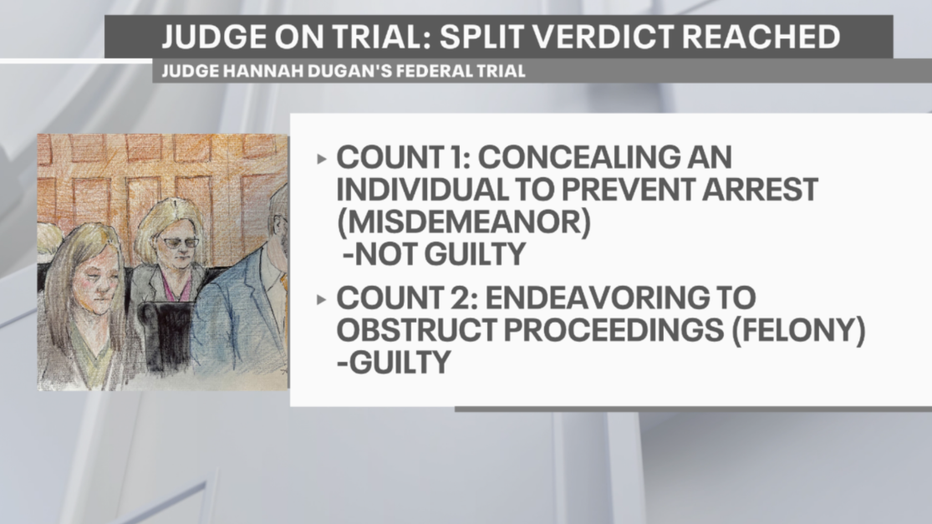
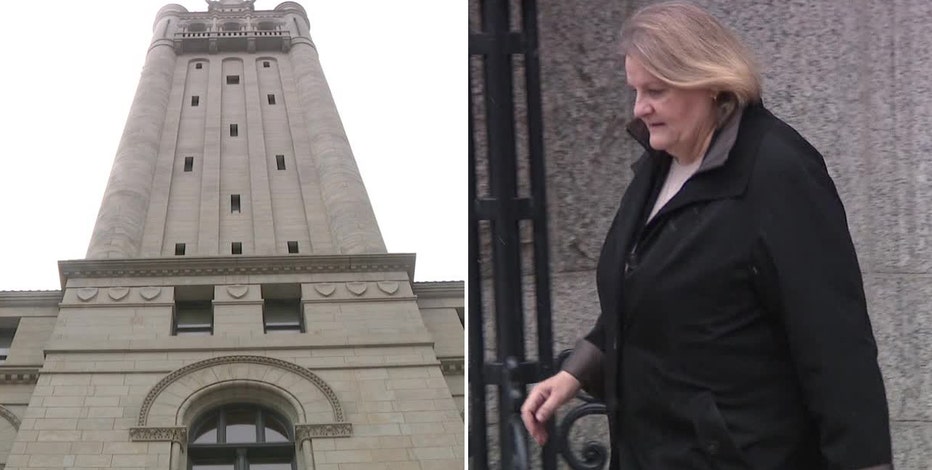
A jury found Milwaukee County Judge Hannah Dugan guilty on Thursday of a felony charge of obstructing federal agents at the courthouse earlier this year, but not guilty of a misdemeanor charge of helping an undocumented immigrant evade those agents who were there to arrest him.
MILWAUKEE - A jury found Milwaukee County Judge Hannah Dugan guilty on Thursday of a felony charge of obstructing federal agents at the courthouse earlier this year, but not guilty of a misdemeanor charge of helping an undocumented immigrant evade those agents who were there to arrest him.
Live updates from Thursday, Dec. 18
-----
Response to the verdict
9:30 p.m.:

Judge Dugan trial: What sentence could Dugan now face?
Now that Judge Hannah Dugan has been convicted of felony obstruction in federal court, what sentence could she face in the weeks to come? FOX6 News gets expert opinion on the matter.

Judge Dugan trial: Will Dugan ever be a judge again?
Now that Judge Hannah Dugan has been convicted of a felony, will she ever be a judge again? The FOX6 News team poses the question.

Judge Dugan trial: What was going on with the jury?
Why did it take more than six hours to reach a verdict for the jury in the Judge Hannah Dugan trial? Was there a holdout? FOX6 News poses the questions to our experts.

Judge Dugan trial: Reaction to split verdict from former U.S. Attorney
WATCH: Former U.S. Attorney Jim Santelle offerred his reaction to the split verdict in the Judge Hannah Dugan federal trial.

Judge Dugan trial: Defense reaction to split verdict
WATCH: Defense attorney Steven Biskupic offered a brief reaction to the split verdict in the federal trial of Judge Hannah Dugan.

Judge Dugan trial: Interim U.S. Attorney Brad Schimel reaction
WATCH: Interim U.S. Attorney Brad Schimel reacts to the split decision in the verdict in the Judge Hannah Dugan trial.

Split verdict in Dugan trial, attorney weighs in
Immigration and criminal defense attorney Marc Christopher joins FOX6 WakeUp to talk about the split verdict in the Judge Dugan trial.
Dugan's team responds
8:49 p.m.:
The Hannah Dugan Legal Defense Team provided the following statement:
"While we are disappointed in today’s outcome, the failure of the prosecution to secure convictions on both counts demonstrates the opportunity we have to clear Judge Dugan’s name and show she did nothing wrong in this matter. We have planned for this potential outcome and our defense of Judge Dugan is just beginning. This trial required considerable resources to prepare for and public support for Judge Dugan’s defense fund is critical as we prepare for the next phase of this defense."
Dugan guilty of obstruction, not guilty of helping man evade agents
Jury's verdict
8:36 p.m.:
U.S. District Judge Lynn Adelman read the jury's verdict. The jury found Dugan not guilty of count one, helping Flores-Ruiz evade arrest, but guilty of count two – which was obstructing federal agents at the courthouse.
The jury was then dismissed.
Judge Hannah Dugan verict
Verdict is in
8:32 p.m.:
The court announced the jury reached a verdict after more than six hours of deliberation.
Jury receives case, begins deliberations
Question about pending proceeding
7:31 p.m.:
U.S. District Judge Lynn Adelman said the court was "struggling" to determine an answer to the jury's question but is advancing with "to know of the pending proceeding, the defendant needed to have sufficient knowledge of the proceeding."
The government did not object, and the defense made a record of its stance.
6:49 p.m.:
U.S. District Judge Lynn Adelman returned to the bench because the jury was seeking further clarity on whether Dugan needed to know the identity of the subject of a pending proceeding – in this case, Flores-Ruiz.
The government argued Dugan did not need to know a warrant was specifically for Flores-Ruiz in order to obstruct a pending proceeding, while the defense argued Dugan could not obstruct a pending proceeding if she did not know who it was for.
Adelman left the bench to consult with his clerks.
Jury orders dinner
5:39 p.m.:
U.S. District Judge Lynn Adelman said the jury wanted to order pizza. It's unclear how much longer deliberations could last.
Question about Dugan's knowledge of warrant
5:13 p.m.:
U.S. District Judge Lynn Adelman returned to the bench and heard additional perspectives from the defense and government. The judge said they could not reach an agreement, but that jurors should go with Dugan "needed to know the identity of the subject of the warrant."
4:50 p.m.:
U.S. District Judge Lynn Adelman returned to the bench. The judge read a question from the jury, in which they wanted clarification about if Dugan needed to know the identity of the subject of the arrest warrant – for example, a specific name – as it relates to the language in the charges.
The defense argued the wording in the indictment means Dugan would have needed to know the warrant was specifically for Flores-Ruiz, while the government argued Dugan would have only needed to know there was a warrant for a specific person.
After hearing arguments from the defense and government, Adelman went to his chambers to consider their points.
4:34 p.m.:
After a knock on the door, a court security officer came out of the jury room with a slip of paper and brought it to the judge's chambers. The jury had a note for consideration, and the parties returned to court.
Jury question about exhibit
3:49 p.m.:
U.S. District Judge Adelman announced there was a question from the jury asking to recall an exhibit that included ICE's internal policies about the steps after a warrant is issued. The judge said the parties agreed on an answer.
3:35 p.m.:
An email from the court said there is a note for the court. Parties began to return to the courtroom. It's unclear what the note is for.
Case goes to jury
2:24 p.m.:
The jury, now 12 people after U.S. District Judge Lynn Adelman selected and dismissed an alternate from the group of 13, received the case. Those 12 jurors then began their deliberations.

Judge Dugan trial: Mindset of the jurors
WATCH: The FOX6 News team talks through the mindset of the jurors who are deliberating the fate of Judge Hannah Dugan. She is accused of helping an undocumented immigrant evade ICE agents.

Judge Dugan trial: What's ahead for the jury?
WATCH: The jury in the Judge Hannah Dugan federal trial will have a lot to consider when the panel begins deliberations. The FOX6 News team talks through that and gets expert analysis.
Judge reads jury instructions
2:00 p.m.:
U.S. District Judge Lynn Adelman read instructions to the jury. Those instructions included what jurors can and cannot consider when determining their verdict. He instructed jurors that an administrative warrant, including ones issued by the U.S. Department of Homeland Security, is a valid warrant.
Adelman read the charges filed against Dugan and the elements of each charge. He explained that if the jury believes the government proved all elements of a charge to be true beyond a reasonable doubt, they should deliver a verdict of guilty on that count. However, he explained, if the jury believes the government failed to prove any element of a charge to be true beyond a reasonable doubt, they should deliver a verdict of not guilty on that count.
The judge explained what jurors should do when they reach unanimous verdict. He announced which of the 13 jurors was selected as the alternate, and that juror was dismissed.
COMPLETE COVERAGE: Federal trial of Milwaukee County Judge Hannah Dugan
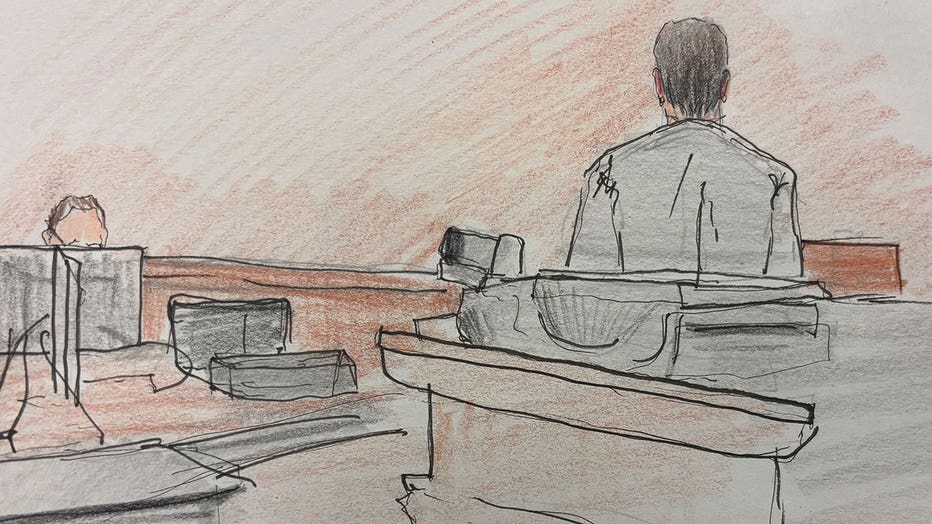
Government closing argument in the Judge Hannah Dugan trial on Thursday, Dec. 18. Sketch courtesy Adela Tesnow.
Government's rebuttal
"Distractions" disguised as defenses
1:28 p.m.:
U.S. Attorney Richard Frohling argued the defense's closing arguments brought up things that were not evidence in the case – telling jurors they just heard a "series of red herrings" that were "distractions" disguised as defenses.
Frohling pointed to the defense's claims of confusion from the parties involved over a draft policy that was never in place, security protocols and a warrant.
The attorney said there was "no doubt" that the law allowed ICE to conduct an arrest in the public hallway, and their plan to do so could not happen because of Dugan's actions. He argued Dugan concealed Flores-Ruiz as soon as he went through a jury door into a non-public hallway.
Frohling argued there was no evidence that federal agents called off their plan to arrest Flores-Ruiz, but that if they did, the crimes of which Dugan is accused had already taken place.
Frohling walked jurors through the evidence they had seen, watched and heard. He reiterated the key points of the government's case.
The government rehashed the distance between the main courtroom door and the door – 11 feet, 10 inches – through which Flores-Ruiz exited into the public hallway. Frohling pointed to the defense's claim that agents did not notice which door Flores-Ruiz came through; he argued that if it didn't matter, then why send Flores-Ruiz down that hallway in the first place? He said the only difference was the restricted hallway had access to a stairwell, which he argued was evidence of her intent to conceal.
Frohling also brought up an audio recording in which Dugan said, "I'll do it…I'll get the heat," as evidence that she knew what she was doing was wrong. And he told the jury the case is not a "referendum on ICE," but about "preserving the rule of law." He said, if judges can choose which laws to enforce or not enforce, it could be "dangerous" and "problematic" for all.
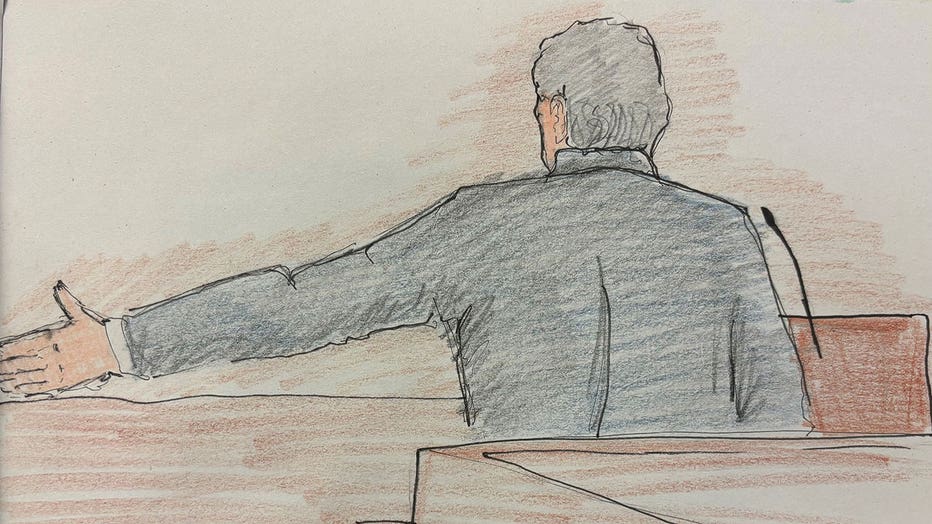
Defense closing argument in the Judge Hannah Dugan trial on Thursday, Dec. 18. Sketch courtesy Adela Tesnow.
Defense's Jason Luczak makes closing arguments
Final points
1:15 p.m.:
Luczak told the jury that Dugan is presumed innocent and that the burden of proof is on the government to show otherwise. He also told jurors that they cannot consider Dugan's not testifying when making a decision.
The defense attorney brought up the elements the government needed to prove for the charges filed against Dugan. Luczak argued Dugan did not conceal Flores-Ruiz from arrest, because he appeared in the same public hallway where agents planned to arrest him. He said testimony showed Dugan did not knowingly interfere with a proceeding, because she thought she was following the correct protocols.
Luczak said the government wants the jury to blame Dugan for everyone's actions on April 18, but the truth is for jurors to decide. He gave a list of questions for the jury to consider before the government's rebuttal.
Luczak argued Dugan never acted corruptly but was doing her job as a judge; she complied with a draft policy, and sent a man and his lawyer out of her courtroom.
Disputed audio recordings, what the video shows
1:07 p.m.:
Luczak claimed audio recordings from inside Dugan's courtroom on April 18 were manipulated and "melded together" from multiple microphones in the courtroom. He argued those recordings and accompanying transcripts were incomplete, hard to hear, confusing and not very good evidence.
The defense said jurors should focus not on what was heard on recordings, but on actions that were shown on video and testimony from Flores-Ruiz's attorney.
Luczak argued the attorney testified that Dugan told them to go down a restricted hallway "straight ahead," where a door led into the public hallway. He questioned how Flores-Ruiz could have ever been concealed exiting from a door that's 11 feet away from the main courtroom door. He said the distance between the doors was never raised as an issue when federal agents testified.
The defense argued the government can't have it both ways – that Dugan was scheming but could not complete the act. He said her intent was to send him where he went, which was into the public hallway.
Federal agents' plan to arrest Flores-Ruiz
12:54 p.m.:
Luczak argued that federal agents changed their plan when it came to arresting Flores-Ruiz, and that Dugan therefore did not obstruct a proceeding. He pointed to what he described as contradictory testimony from those agents and gaps in the evidence.
The government wants to blame Dugan for everyone else's actions on April 18, Luczak said. He argued the evidence suggests agents did not try to arrest Flores-Ruiz in the public hallway, which was what they said they planned to do. He said agents' decision not to arrest Flores-Ruiz in the hallway happened before he ever entered Dugan's courtroom.
Once Dugan left the agents and returned to her courtroom, Luczak argued she had no control over what agents did that day.
Dugan said the evidence shows federal agents were seeking permission, showing there was confusion from agents and Dugan about what could and could not take place. He posited that jurors should question why the government's mistakes could be forgiven, but that Dugan's mistakes would mean she had "criminal intent."

Judge Dugan trial: Recap of defense case
WATCH: The FOX6 News team talks through the defense case and the start of closing arguments in the Judge Hannah Dugan trial. She is accused of helping an undocumented immigrant evade ICE agents.
Replaying of audio, video evidence
12:45 p.m.:
The defense brought up testimony from Judge Kristela Cervera. Luczak replayed video and audio that, the defense argued, prove Dugan did not know ICE was present or had a warrant until she was on the bench.
Luczak laid out a timeline and said Cervera's testimony about what Dugan told her was wrong. He claimed Cervera was "bolstering the government's case" to "save herself."
Luzcak argued that surveillance video evidence, which did not have audio but showed Dugan's face, contradicted testimony about what she told agents in the public hallway. He also argued witnesses mischaracterized her demeanor.
Federal agents at courthouse was not routine
12:35 p.m.:
Luczak told the jury that ICE was not showing up at the Milwaukee County Courthouse until the Trump administration took office, and their presence on April 18 was not routine. He argued that ICE did not follow its own policies.
Luczak said that Dugan's intent was not to help anyone evade law enforcement, arguing she is an honest, law-abiding citizen who had no reason to risk her career to help someone.
"Give me a break," Luczak said, after expressing the notion that Dugan could have been "going out on a limb" to help Flores-Ruiz. He argued the case is riddled with doubt.
The defense attorney pointed to "legitimate concerns" and "legitimate confusion" from multiple judges, including Dugan, that were not about impeding ICE but about having an understanding of what federal agents were able to do. He argued judges had conflicting guidance, and Dugan asked for clear guidance.
Luczak argued that a draft policy from Chief Judge Carl Ashley, while not an official policy, was guidance that Dugan had in the absence of anything official.
An "unprecedented trial"
12:32 p.m.:
Defense Attorney Jason Luczak began his closing statements calling this a "very unprecedented trial." He argued the case gives the government the power to "crush someone" and is trying to make an example out of Dugan.
Luczak argued that everyone, including judges, has rights to protect them from the government's power – but told jurors that they are the "ultimate check" on government overreach and power.
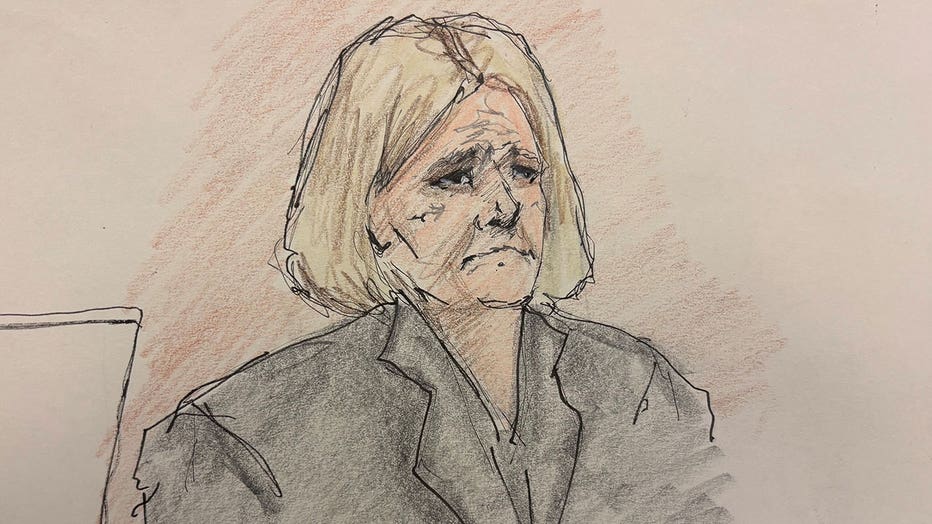
Judge Hannah Dugan trial on Thursday, Dec. 18. Sketch courtesy Adela Tesnow.
Government's Kelly Brown Watzka makes closing arguments
12:21 p.m.:
Brown Watzka concluded that Dugan acted corruptly and did something judges should not do because she did not get the courthouse policy that she wanted. She said the judge may not like ICE, but it did not give her the right or authority to do what she did.
The attorney reminded jurors that personal opinions about ICE or immigration should not factor into their decisions. She highlighted the "respectful and professional" work and conduct of the federal agents who were assigned to arrest Flores-Ruiz outside the courthouse.
If Dugan had done what she took an oath to do on April 18, Brown Watzka argued, no courtroom activities would have been disrupted. She said if Dugan is looking for someone to blame for disruption, she can only blame herself.
Brown Watzka urged jurors to use "common sense" when looking at the evidence, and said "no one is above the law, not even those who wear judicial robes."
Arguments that Dugan obstructed federal agents
12:03 p.m.:
Count two charged Dugan with obstructing a proceeding. Brown Watzka identified ICE as a federal agency, and pointed to testimony from multiple federal agents with ICE and other agencies. She argued the warrant to arrest Flores-Ruiz was a "pending proceeding" with the federal agency.
The attorney argued Dugan knew of the pending proceeding because agents told her that they had an administrative warrant – even if she did not see it.
Brown Watzka also argued that Dugan "endeavored" to interfere with federal agents' arrest plan. She said it meant Dugan did not need to be successful in an attempt to interfere – but pointed to the judge's directions to federal agents separating a six-person arrest team, which interfered with their plan to arrest Flores-Ruiz.
The government argued that Dugan acted "corruptly," and wasn't a "confused or paranoid" judge but a "frustrated and angry" judge who was "fed up" and decided to "take matters into her own hands" while wearing her judicial robe in a public area – which was unusual.
Brown Watzka pointed out that there was no official courthouse policy or law that would have prevented ICE from making an arrest in a public area.
Brown Watzka also pointed to audio of Dugan saying, "I'll do it…I'll get the heat," and "I'm in the doghouse with (Chief Judge) Carl (Ashley) because I tried to help that guy." The attorney argued those were the words of someone who knew she was doing something wrong.
Arguments that Dugan concealed Flores-Ruiz from arrest
11:50 a.m. (approx.):
The attorney highlighted count one, which charged Dugan with concealing an individual from arrest. She pointed out that a federal warrant was issued, and an administrative ICE warrant to arrest Flores-Ruiz fit that criteria.
Brown Watzka argued that evidence showed Dugan knew why federal agents were at the courthouse when they said they had a warrant. She also argued that Dugan took "affirmative, physical action" to harbor or conceal Flores-Ruiz from authorities in two ways – when she ordered the federal arrest team out of a public hallway, and when she directed Flores-Ruiz and his attorney through a restricted hallway.
Dugan intended to prevent Flores-Ruiz's arrest, Brown Watzka argued. Her argument included that the events involving Flores-Ruiz's case, which unfolded in the judge's courtroom, were unusual – calling it a "rush job." She also argued Dugan intended to "sneak (Flores-Ruiz) out a back door" into a restricted hallway and down the stairs. She said there is "no way to spin" and "no logical explanation" for Dugan's discussion involving stairs.
Brown Watzka argued that the fact Flores-Ruiz and his attorney went out the "wrong"door does not make Dugan not guilty. She said the "stairs discussion" proves "beyond a reasonable doubt," that Dugan intended to prevent Flores-Ruiz's arrest.
"Polarizing" political issue
11:46 a.m.:
Attorney Kelly Brown Watzka delivered the government's closing arguments. She began by arguing that Dugan used her judicial authority to "replace the law" with her own "personal policy preferences." She said the law does not give judges authority to do whatever they want whenever they put on their robe.
Brown Watzka called immigration policy a "polarizing" issue in the country that people hold personal opinions about – but personal opinions about immigration or ICE should not influence decisions about whether Dugan broke the law.
SIGN UP TODAY: Get daily headlines, breaking news emails from FOX6 News

Defense rests in trial of Judge Hannah Dugan
Closing arguments are set to get underway later on Thursday.
Defense rests its case, Dugan does not testify
9:53 a.m.:
Defense Attorney Steven Biskupic announced that the defense rests. Dugan did not testify in her own defense.
U.S. District Judge Lynn Adelman then announced a break.
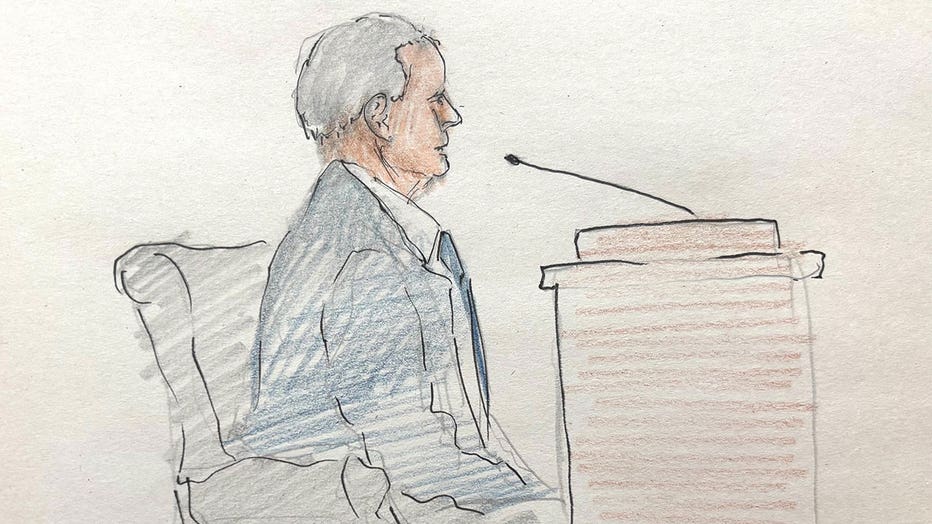
Former Milwaukee Mayor Tom Barrett testifies in the Judge Hannah Dugan trial on Thursday, Dec. 18. Sketch courtesy Adela Tesnow.
Tom Barrett, former Milwaukee mayor
Government cross-examination: Purpose of Barrett's testimony
9:52 a.m.:
Barrett said that he was not testifying as a factual witness, and he was not at the Milwaukee County Courthouse on April 18.
Defense questioning: Dugan described as "extremely honest"
9:48 a.m.:
The defense called former Milwaukee Mayor Tom Barrett to the stand. He is not currently employed, but he previously practiced law and held legislative positions throughout his career.
Barrett said he's known Dugan for "well over" 50 years, and they first met in high school. He said he would spend time at the Dugan home, and described the Dugan family as "close-knit."
The former mayor testified he and Dugan have stayed in touch throughout the years, in both personal and professional capacities.
Barrett described Dugan as "extremely honest" and someone who "will tell you how she feels."

Maura Gingerich testifies in the Judge Hannah Dugan trial on Thursday, Dec. 18. Sketch courtesy Adela Tesnow.
Maura Gingerich, public defense attorney
Government cross-examination: Actions of agents, judges
9:41 a.m.:
Gingerich said it was "stressful" to see who she believed to be plainclothes law enforcement officers at the courthouse. She admitted she took photos of those people.
The public defender said the federal agents were not causing disruptions at the courthouse. She said she did not see what happened involving Flores-Ruiz.
Gingerich said she informed Judge Kristela Cervera during a later case that a client of the public defender's office had been arrested.
U.S. Attorney Richard Frohling questioned Gingerich, asking if she told Cervera she "knew what she was trying to do?" Gingerich said her comment was about Dugan and Cervera asking for a warrant.
On re-direct from the defense, Gingerich said she never interacted with Dugan.
Defense questioning: Taking photos of federal agents
9:41 a.m.:
The defense called Maura Gingerich, a criminal defense attorney with the state public defender's office, as its third witness. She was at the Milwaukee County Courthouse on April 18.
Gingerich testified she tried to take pictures of who she thought were federal agents on the sixth floor, where Dugan's courtroom is located. She said she tried to take pictures so she could show her manager and the head of her office because she'd heard of arrests at the courthouse, and doing so would allow them to request guidance from the chief judge.
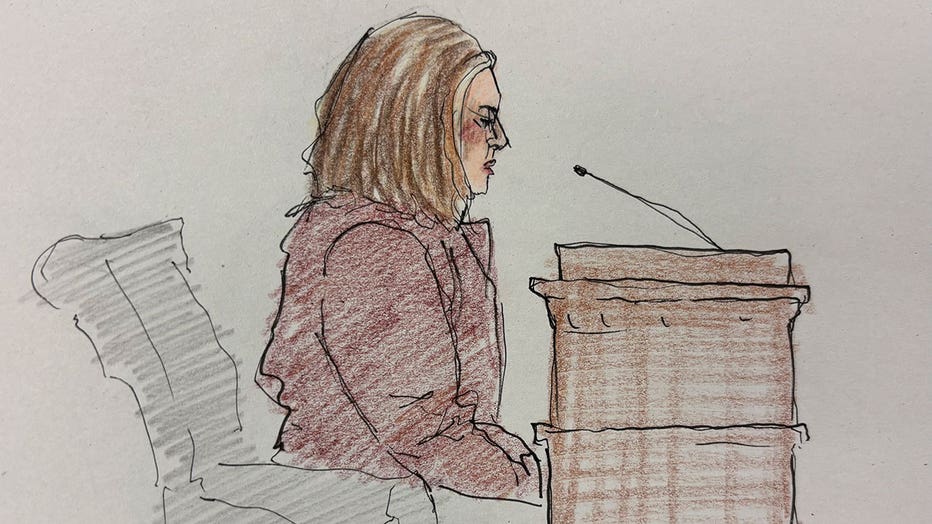
Laura Gramling Perez testifies in the Judge Hannah Dugan trial on Thursday, Dec. 18. Sketch courtesy Adela Tesnow.
Milwaukee County Judge Laura Gramling Perez
Government cross-examination: Acknowledgment of draft policy
9:39 a.m.:
Gramling Perez testified that she thanked Chief Judge Carl Ashley for drafting a policy on how to handle ICE at the courthouse, telling him it was a solid policy, but that the policy never became official.
As it relates to the draft policy, Gramling Perez acknowledged its contents. She reiterated that the chief judge had not issued a policy, but that Milwaukee County had issued a policy. She was unsure how the county's policy affects the courts.
Government cross-examination: Dugan replies to email
9:37 a.m.:
Gramling Perez testified that Dugan replied to an email, thanking her for an email that included highlights of an online training about how ICE operates in courthouses. That email noted that ICE can conduct arrests in public areas, but there are certain limitations on that enforcement action.
Government cross-examination: ICE, courthouse policies
9:28 a.m.:
Gramling Perez testified that Chief Judge Carl Ashley sent an email to all judges that included an ICE document that outlined the agency's policy.
The judge said there is no court policy about where ICE can conduct arrests, and to her knowledge, the chief judge had not issued an official policy.
In an email to the chief judge, and later sent to Dugan, Gramling Perez wrote that the goal of a court-wide protocol would be to allow lawful ICE actions. She said she did not make a statement about what ICE could or could not do, but she said it was her understanding that the law can allow ICE to make arrests in public areas – but there are certain limitations.
Defense questioning: Chief judge's email thread about ICE
9:26 a.m.:
Gramling Perez testified that Dugan replied to the email thread expressing concern that ICE detentions are "a different animal – and currently the historic protocols are now shifting quickly." She said Dugan wrote it "would be helpful" to have a discussion about outstanding issues and develop a set of protocols.
Dugan wrote the courthouse was in "uncharted waters" and wanted "at least a draft" of written protocols. She also wrote that she'd had people not showing up for court dates and two immigration attorneys had asked her about courthouse protocols.
Defense questioning: Chief judge's email thread about ICE
9:21 a.m.:
Gramling Perez said she found an email from Chief Judge Carl Ashley about ICE operating in the courthouse, after agents made arrests in March, "unusual."
In the email thread, the judge testified that a fellow judge asked if it meant Milwaukee County was cooperating with ICE. Gramling Perez said she replied to that question, with information about an online training with resources.
Gramling Perez, in her email, said key takeaways of the training included that ICE can legally conduct enforcement in public areas of the courthouses and that there are "statutory and policy limitations" to such enforcement. She wrote she "would strongly advise" the courthouse develop a court-wide policy governing ICE actions – including requiring that ICE agents check in with the chief judge before conducting any enforcement.
Defense questioning: Online training about ICE at courthouses
9:15 a.m.:
The defense called Laura Gramling Perez, a circuit court judge in Milwaukee County. She was previously a court commissioner in her career.
Gramling Perez testified to her participation in an email chain with colleagues. She said Chief Judge Carl Ashley had scheduled online training about ICE at the courthouse, which she attended – but noted Dugan had trouble registering for the online training.
The judge said the training was held via Zoom, and the presenters summarized federal policy and federal law about ICE making arrests at courthouses.
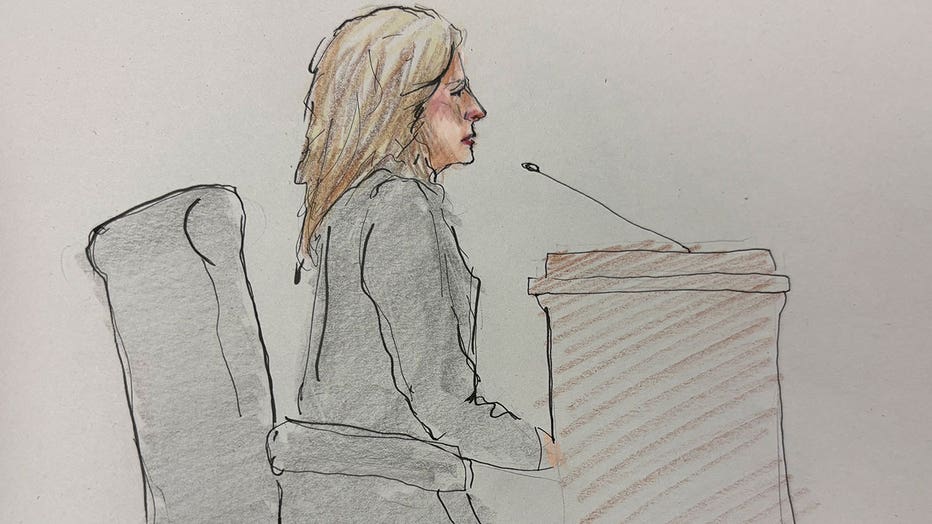
Katie Kegel testifies in the Judge Hannah Dugan trial on Thursday, Dec. 18. Sketch courtesy Adela Tesnow.
Milwaukee County Judge Katie Kegel
Government cross-examination: Arrests at courthouse
9:12 a.m.:
The government questioned Kegel about arrests in public hallways. Kegel said that her email referenced her experience of what she had in her courtroom – not related to ICE but related to what is happening in the courthouse.
Defense questioning: Email sent to colleagues
9:06 a.m.:
The defense's first witness was Milwaukee County Circuit Court Judge Katie Kegel.
Kegel testified to an email she sent to colleagues. It was part of an email thread, the subject of which was "ICE taking people into custody in the public hallways" at the Milwaukee County Courthouse Complex.
In that email, Kegel said, "people have been snatched up out of my gallery while waiting for their hearing." She wrote asking about the development of a standing policy about "detentions of any sort from inside the courtroom."
Kegel testified that, after seeing activity in the gallery that wasn't standard, she has tried to intervene in the past. She said she saw someone who was not in law enforcement clothing, asked what was going on, looked at her deputies, and the people left the gallery. Minutes later, she said she was informed that they were part of a federal task force – not related to immigration.
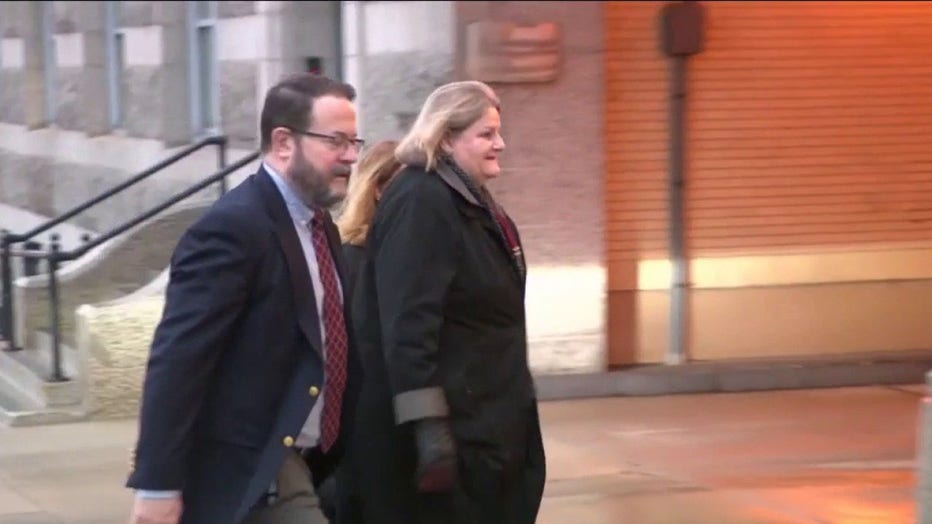
Judge Hannah Dugan enters federal court on Wednesday, Dec. 18, 2025.
Judge Adelman calls court into session
9:05 a.m.:
The 13-person jury entered the courtroom for a fourth day of testimony, with Dugan's defense team prepared to present its case.
Dugan charged
The backstory:
A federal grand jury indicted Dugan, and she pleaded not guilty, in May.
The grand jury's two-count indictment accused Dugan of helping an undocumented man, Eduardo Flores-Ruiz, evade federal agents who were at the Milwaukee County Courthouse to arrest him on April 18. It also states Dugan obstructed those agents in the process.
Flores-Ruiz was in Dugan's courtroom for a misdemeanor battery case. Prosecutors said Dugan told federal agents to go to the chief judge's office down the hall, and she is then accused of telling Flores-Ruiz and his attorney to leave her courtroom through a back door as federal agents waited outside the courtroom to arrest him.
Milwaukee County Judge Dugan trial: How does federal court work?
Jury selection in the federal trial of Milwaukee County Judge Hannah Dugan begins Thursday. So how does federal court work?
Agents arrested Flores-Ruiz outside the courthouse after a brief foot chase that day. Dugan was arrested by federal agents at the Milwaukee County Courthouse on April 25.
The Wisconsin Supreme Court later suspended Dugan indefinitely after she was arrested and charged. Flores-Ruiz later pleaded guilty to illegally reentering the U.S. and, in November, was deported.
Federal Judge Lynn Adelman is overseeing the Dugan trial.
Bonus coverage from Thursday, Dec. 18

Judge Hannah Dugan: Inside the media room
FOX6 News gives you an inside look at the media room at the federal courthouse in Milwaukee, where Judge Hannah Dugan is on trial.

Judge Dugan trial: Hint of politics in case
WATCH: While the prosecution team in the Judge Hannah Dugan trial has indicated this case is not about politics, it can be argued there's an undertone of politics. The FOX6 News team talks through that and gets expert analysis.

Takeaways from day 3 of Hannah Dugan trial
Immigration attorney and criminal defense attorney Marc Christopher joins FOX6 WakeUp to talk about the Judge Dugan trial.
Complete coverage
Dig deeper:
FOX6 News will stream special coverage of the Dugan trial each day on FOX LOCAL. The app is free to download on your phone, tablet or smart TV.
- Day 3: Government rests its case; key testimony from court staff
- Day 2: Fellow judge, federal agents testify about what happened
- Day 1: Opening statements; FBI agents, ICE supervisory officer testify
- Dec. 11: Judge Dugan trial: Jury seated after day of questioning
- Judge Dugan trial: How did we get here?
- Judge Dugan trial: Who is Eduardo Flores-Ruiz?
- How does federal court work?
- Courthouse immigration enforcement policy questions remain
The Source: FOX6 News reviewed court filings and video associated with the case, is at the federal courthouse for the trial and referenced prior coverage of the case.