

Milwaukee officers shot, Tremaine Jones trial: Live updates March 31
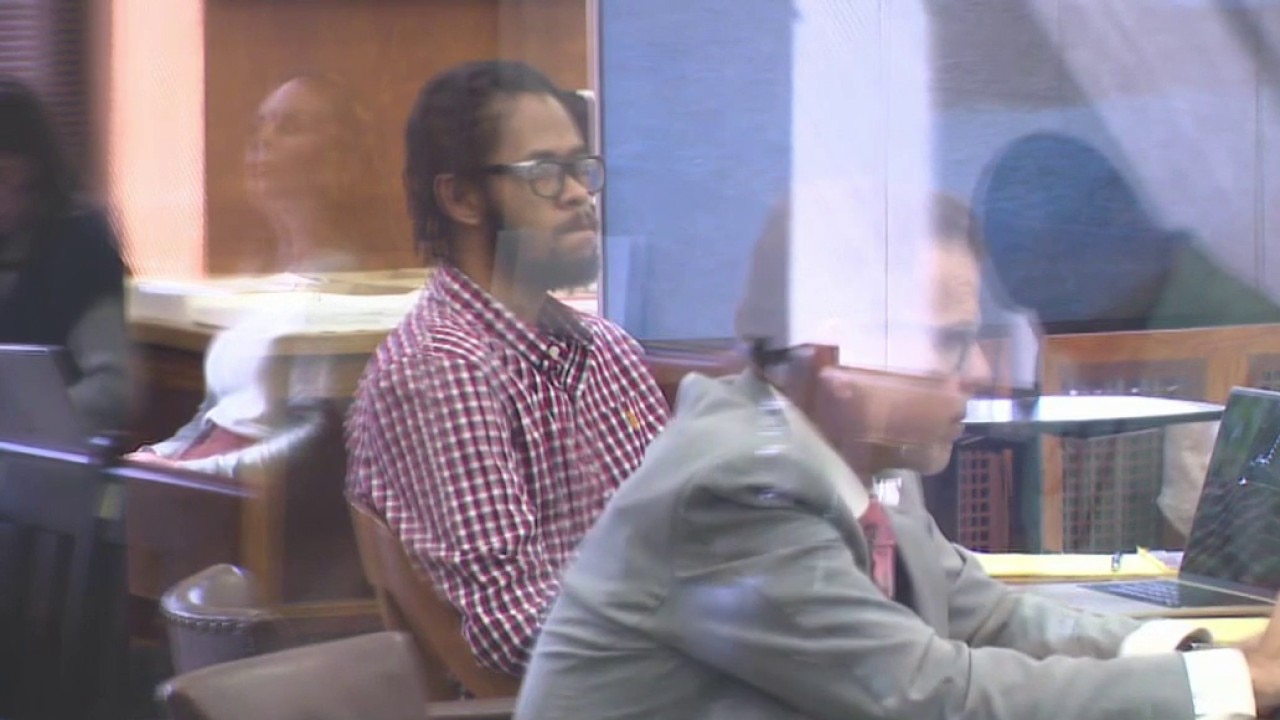
Testimony begins in Tremaine Jones trial
Testimony began Tuesday in the trial of Tremaine Jones, the man accused of killing Milwaukee Police Officer Kendall Corder and wounding Officer Christopher McCray in a shooting last summer.
MILWAUKEE - Testimony began Tuesday in the trial of Tremaine Jones, the man accused of killing Milwaukee Police Officer Kendall Corder and wounding Officer Christopher McCray in a shooting last summer.
FREE DOWNLOAD: Get breaking news alerts in the FOX LOCAL Mobile app for iOS or Android
Live updates | March 31, 2026
Court breaks
4:21 p.m.:
Judge Michelle Havas read the jury instructions and dismissed them for the day. Court is scheduled to resume at 8:30 a.m. on Wednesday, April 1.
PHOTO GALLERY: Pool images from March 31, 2026
Home surveillance video
3:53 p.m.:
MPD Homicide Det. Jose Flores testified. He was involved in the investigation into the shooting near 25th and Garfield and said he went to a nearby home after receiving a tip about surveillance video. That video was shown in court.
The video, from a woman who had called 911 three times that night, showed several people in the roadway prior to the time Corder and McCray arrived. Flores said there were many loud voices and threats heard in the video, and one person had a bag and was seen carrying what appeared to be a "long gun." The person with the gun appeared to fire shots while the weapon was pointed toward the sky, after which the other people started to run.
Flores said he was tasked with obtaining a DNA sample from Jones as part of the investigation. He collected the sample on June 28, 2025 – two days after the shooting – while Jones was in custody.
On cross-examination, Flores testified that roughly 12-13 minutes passed between the time the home surveillance video ended and the time the officers were then shot. He also testified the video did not depict the shooting of the officers.
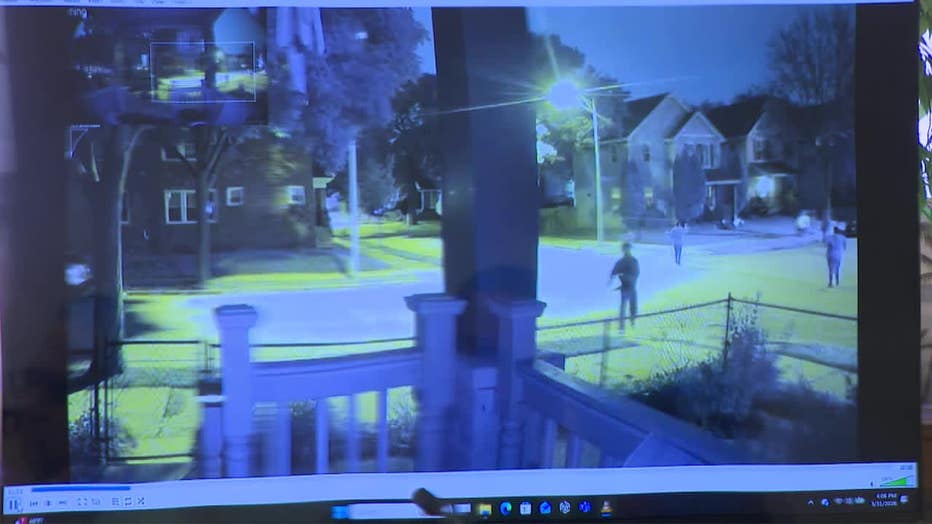
Home surveillance video of disturbance in street shown in court on March 31, 2026.
Identification found in backpack
3:33 p.m.:
Martin Saavedra, an MPD homicide detective, was called to the stand. He is the partner of Det. Cedric Madden, who offered testimony on the evidence collected before Saavedra was called.
Saavedra testified about a backpack that was found at the shooting scene, on the ground between two vehicles. The state showed the backpack in court. The detective said he found Jones' social security card, birth certificate and other documentation inside the backpack. There were snacks and a hygiene kit in the backpack as well.
The detective also said he found a receipt for a gun that was purchased on June 19, 2025 – the week before the shooting – and Jones was listed as the buyer. Saavedra said the serial number for the lower receiver of a rifle, which was found at the scene, matched the number on that receipt.
On cross-examination, Saavedra testified that he could not confirm when the backpack would have been dropped between the vehicles. The detective said the backpack was sent in for processing, but it was not tested. On redirect, Saavedra said there is a limit on how many items can be tested.
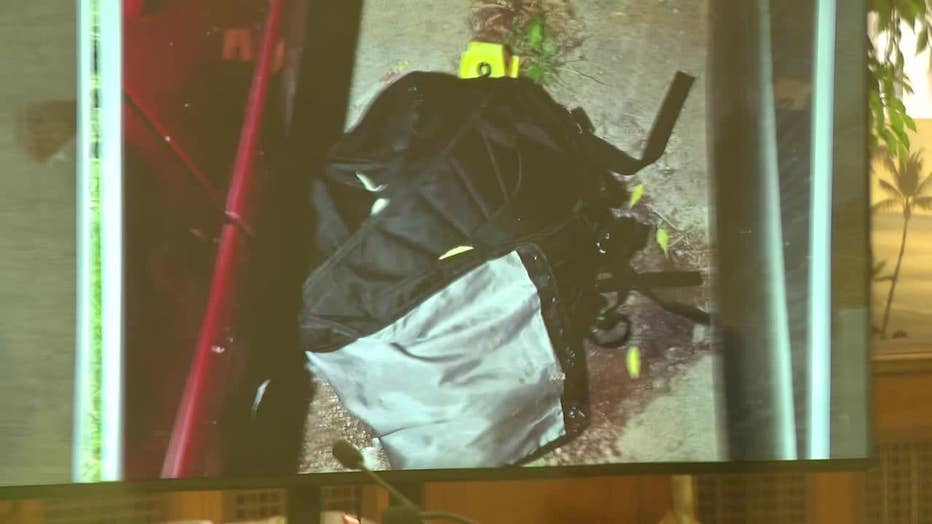
Photo of backpack, found at scene near 25th and Garfield, shown in court on March 31, 2026.
Detective details evidence
3:17 p.m.:
MPD Homicide Det. Cedric McFadden's testimony, centered on evidence collected at the scene, continued after the court took its afternoon break.
McFadden said they experienced "torrential downpours" while they tried to process the scene, so they put up a tent to preserve what they could – including blood. The shooting happened at night, and the detective described the area as "very dark." He also said they recovered a black ski mask.
The defense had no questions.
1:58 p.m.:
The state called MPD Homicide Det. Cedric McFadden to testify. He was involved in the investigation into Corder's death, including documenting and processing evidence from the scene.
McFadden said he created a scene diagram as part of the investigation. The state showed the jury photos from the scene and asked McFadden to explain where those photos are in relation to the diagram. He also spoke to, based on photos and the diagram, where the officers would have been and where evidence was located.
The detective said they found a gun and two gun magazines that were taped together, such that if one magazine ran out, the operator could remove it and flip it around to reload the weapon. The gun was among the pieces of evidence that were shown to the jury during McFadden's testimony.
McFadden confirmed the gun and rifle casings found at the scene were of the same caliber, but it would be up to a crime lab, not a detective, to determine whether those casings came from that gun. He said ShotSpotter indicated 16 shots were fired; detectives initially recovered 13 casings, and additional searches subsequently uncovered three more.
The state also questioned McFadden about Corder's vest and McCray's shirt, which were collected as evidence. Corder's vest was saturated with blood, and McCray's blood-soaked shirt with a hole in the back.
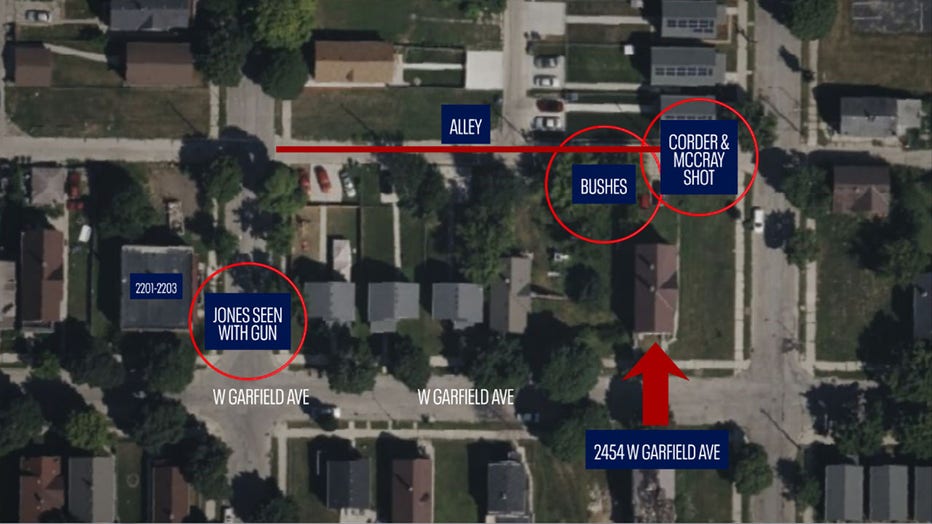
Map of key locations in shooting of Milwaukee Officers Kendall Corder and Christopher McCray
K-9 finds rifle
1:50 p.m.:
MPD Officer Nicholas Wilckens, who works with a K-9, took the stand. He testified that he and a K-9, which is trained to search and detect explosives, including firearms, responded to the shooting scene.
Wilckens said he and the K-9 were tasked with searching the alley, including areas that were "overgrown with tall grass and weeds." They found a rifle near a fence that was within the brush, and he alerted detectives.
The defense had no questions.
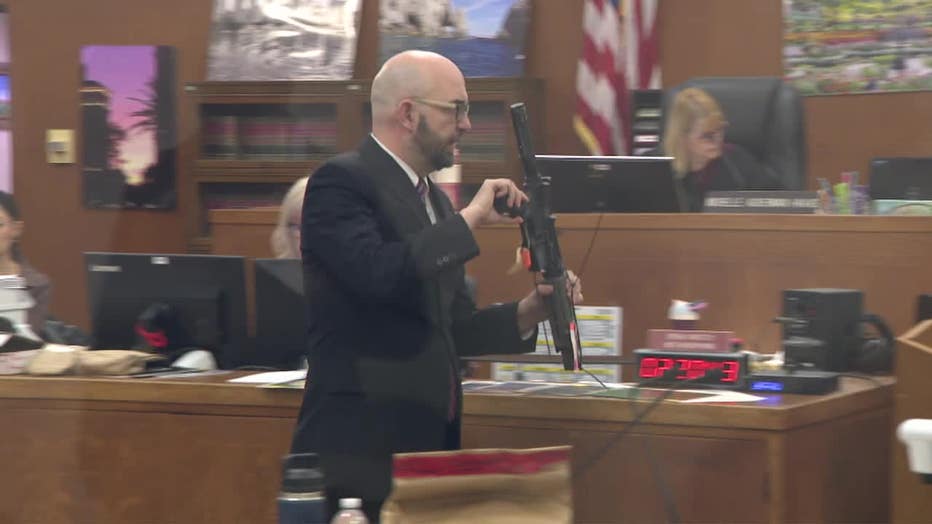
Assistant District Attorney Grant Huebner holds rifle recovered from the scene during the trial of Tremaine Jones on March 31, 2026.
Officer finds backpack
1:36 p.m.:
MPD Officer Sarah DeLeon was the first witness to testify when court resumed after a break for lunch. She is assigned to Police District 7, but responded to the shooting scene.
DeLeon testified about what she saw when she arrived, including overgrown brush in the alley near 25th and Garfield where the officers had been shot. She also said she found a backpack on the ground between two parked vehicles. The state showed the backpack, which was collected as evidence and admitted as an exhibit for trial, in court. The state also showed identification that had the name "Tremaine Jones," which was found in the backpack.
On cross-examination, DeLeon testified that she was not the person who collected the backpack for evidence and she was unsure what if any testing may have been done on the backpack.
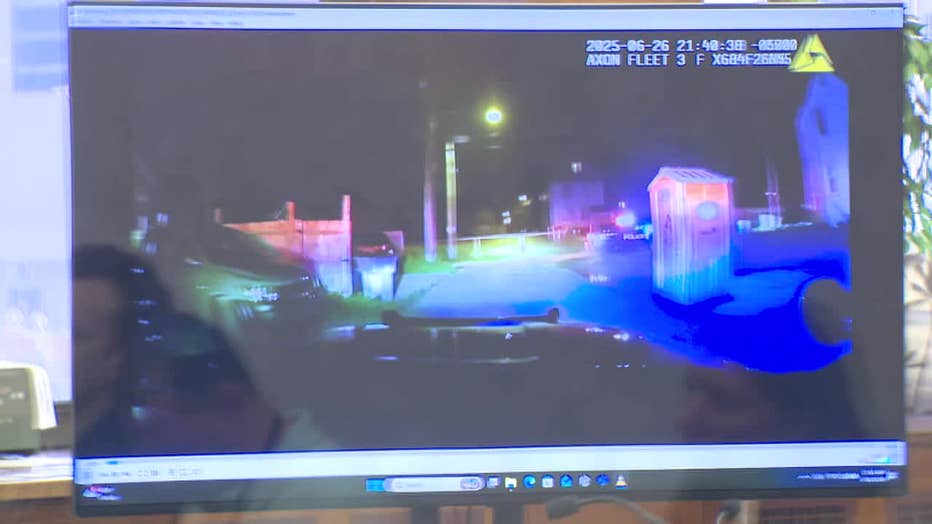
Dashboard camera video from MPD Officer Charles Worthington's vehicle shown in court on March 31, 2026.
SWAT officer responds
11:37 a.m.:
The state called MPD Officer Charles Worthington, a member of the tactical enforcement unit, which is the department's SWAT team, to the stand.
"We heard an officer go over the air, stating that there is shots fired and that an officer is down," he said.
The shooting, near 25th and Garfield, happened in Police District 3. Worthington said it had been a busy night in that district, and he and his unit were already in the district for support when the officers were shot. The state played dashboard camera video from Worthington's vehicle that captured their response to the scene, as well as footage from Worthington's body-worn camera.
Worthington testified that Corder was unresponsive, and McCray was "shielding" his fellow officer, when he and his team got there. They then began to render aid, and McCray said they'd been "ambushed."
The defense had no questions.
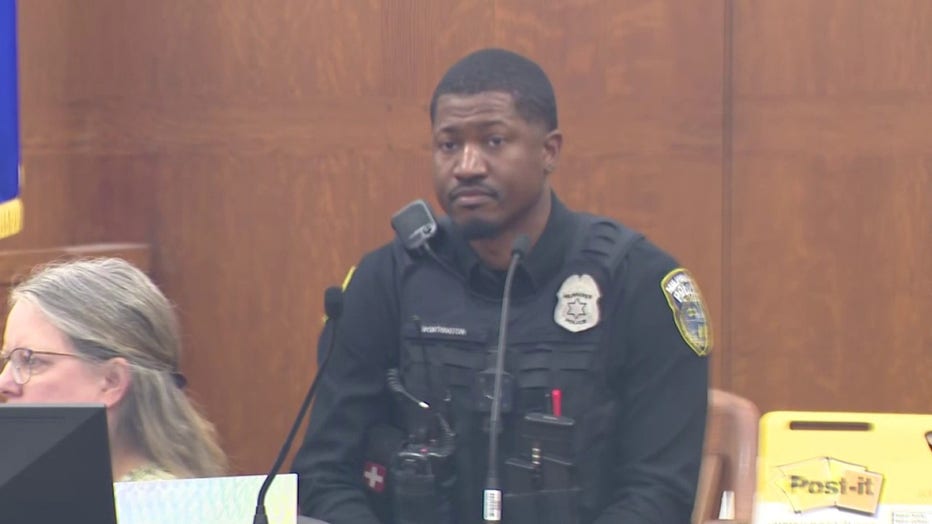
MPD Officer Charles Worthington
First officers arrive
11:12 a.m.:
MPD Officer James Borneman testified. He said he was at a homicide scene, training a new officer, and they were called to respond to the scene where Corder and McCray had been shot. They were the first to arrive.
"Pulled Officer McCray off of Corder, and he had said that he was shot in his leg," he said.
Borneman said they did not immediately see the officers, who were in a dark alley, when they arrived. It wasn't until a flashlight was shone that he said they saw the officers. Borneman said he began to render aid, and McCray told him they had been "ambushed" and the suspect had run away.
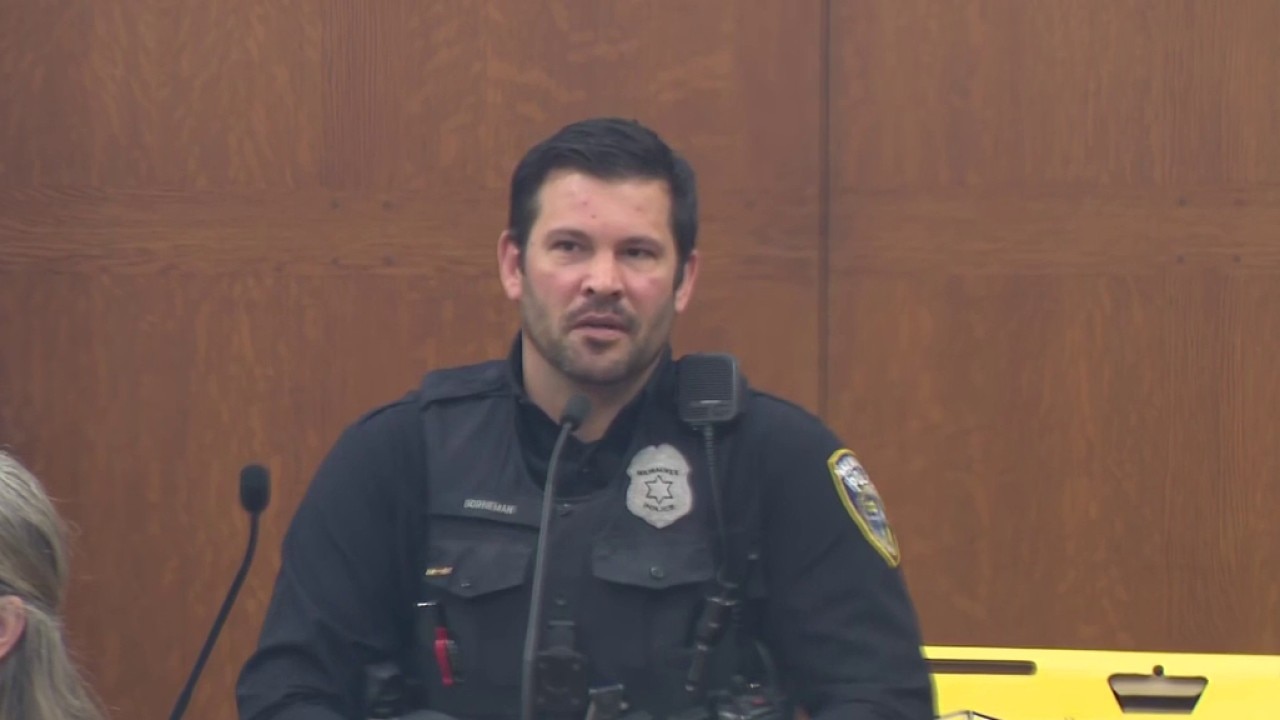
Tremaine Jones trial: Testimony from officer arriving on scene
Milwaukee Police Officer James Borneman testified in the Tremaine Jones trial. He was one of the first to respond to the scene after it was reported Officers Kendall Corder and Christopher McCray were shot.
The defense had no questions, and the state then called Officer Benen Malacara – the officer Borneman was training that night. He said it was his fifth day on the street out of the academy.
Malacara testified that they heard yelling over the radio while they were at a homicide scene. He understood that there had been another shooting, and he was not sure exactly what had happened. Borneman drove them to the area where the officers had been shot, but there was some initial confusion as to where exactly the officers were.
Once they found Corder and McCray, Malacara said they began to render aid and other first responders began to arrive "rapidly." He said he remembered McCray was in "distress" but described where the shooter had been.
The defense, again, had no questions.
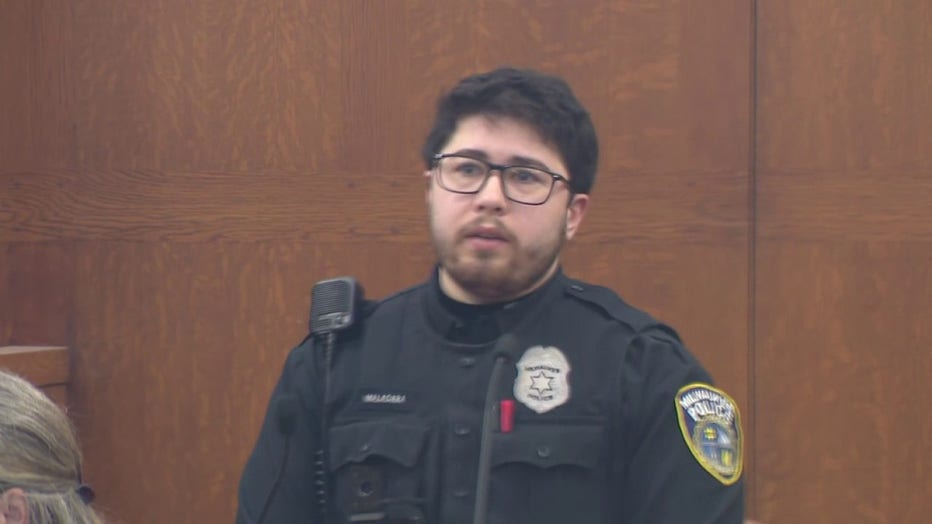
MPD Officer Benen Malacara
911 calls, dispatch records
10:34 a.m.:
After the court returned from a break, the state called MPD Homicide Det. Shamara Gonzalez to the stand. She testified to the accuracy of 911 call recordings, dispatch records, audio recordings and more related to the police response to 25th and Garfield and the shooting that followed.
The state played multiple 911 calls for the court. The calls described a group of people in the area and noted a person in the group had a "big" or "large" gun. One person called back, and gunshots could be heard in the background.
Audio recordings from police, played in court, captured the aftermath of the shooting – "shots fired," "my partner's hit," and "officer down."
On cross-examination, the defense questioned Gonzalez about the times the 911 calls were made, and the time officers were dispatched.
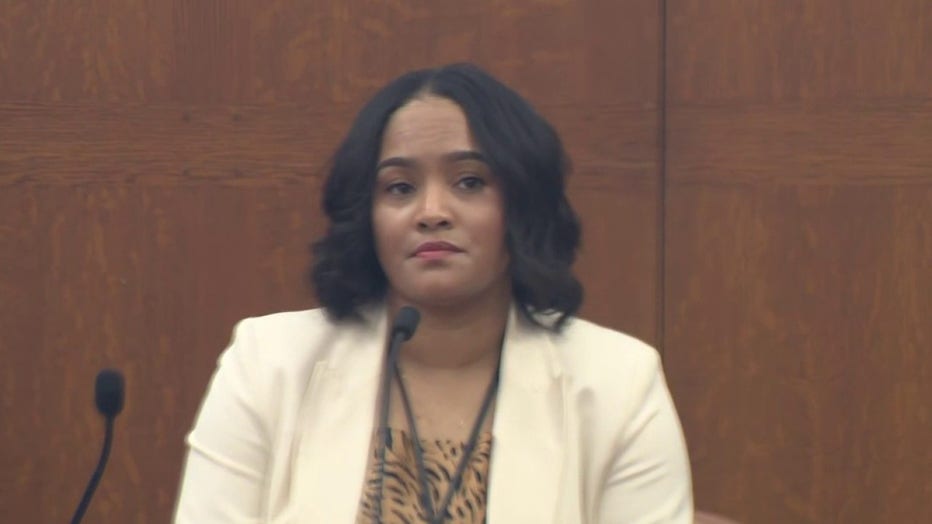
MPD Detective Shamara Gonzalez, Homicide Division
ShotSpotter report
9:58 a.m.:
The state called Milwaukee Police Officer Roberto Hernandez as its first witness. Hernandez testified he has worked with ShotSpotter for years, a technology system that MPD uses to help find and respond to shooting locations.
Hernandez said the system issued three separate alerts for the night/area in which the officers were shot. The state played audio recordings that ShotSpotter captured, which included the sounds of multiple gunshots.
On cross-examination, Hernandez testified that ShotSpotter can only identify the time and approximate location of a shooting – not the caliber of the weapon, circumstances of the shooting, or who the shooter was.
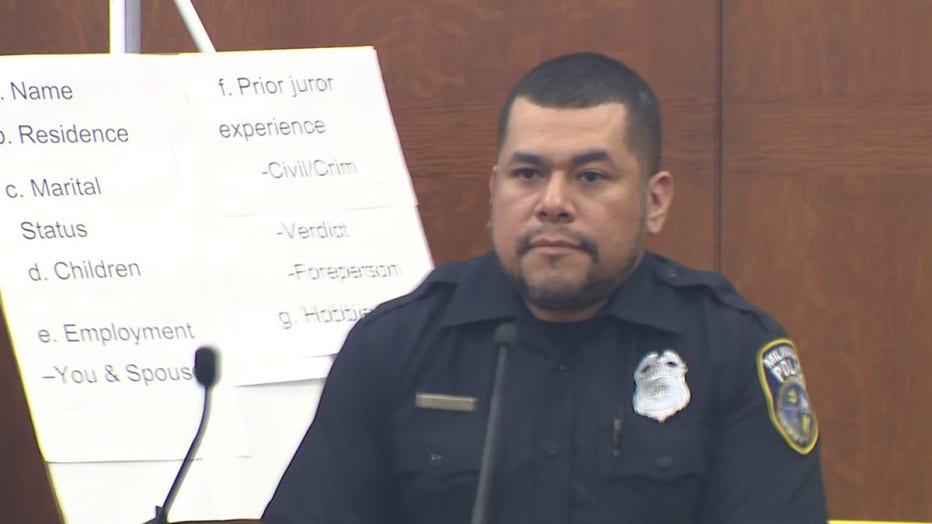
MPD officer Roberto Hernandez testifying to ShotSpotter technology
Defense's opening statement
9:51 a.m.:
Defense Attorney Abigail Ruckdashel delivers the defense's opening statement. She called Corder's death a "tragedy," and said everyone could and should acknowledge that. She also said it's the position of the defense that the state "does not have the right person."
"Nobody in this room believes that the people who are, I guess, paid to keep this city safe should lose their life doing their job, and by all accounts, Officer Corder was good at it," she said. "The one thing that makes this tragedy worse is if we don't have the right person."
Ruckdashel added: "If our path is reasonable, or at least as reasonable as the state's path, you must find Mr. Jones not guilty."
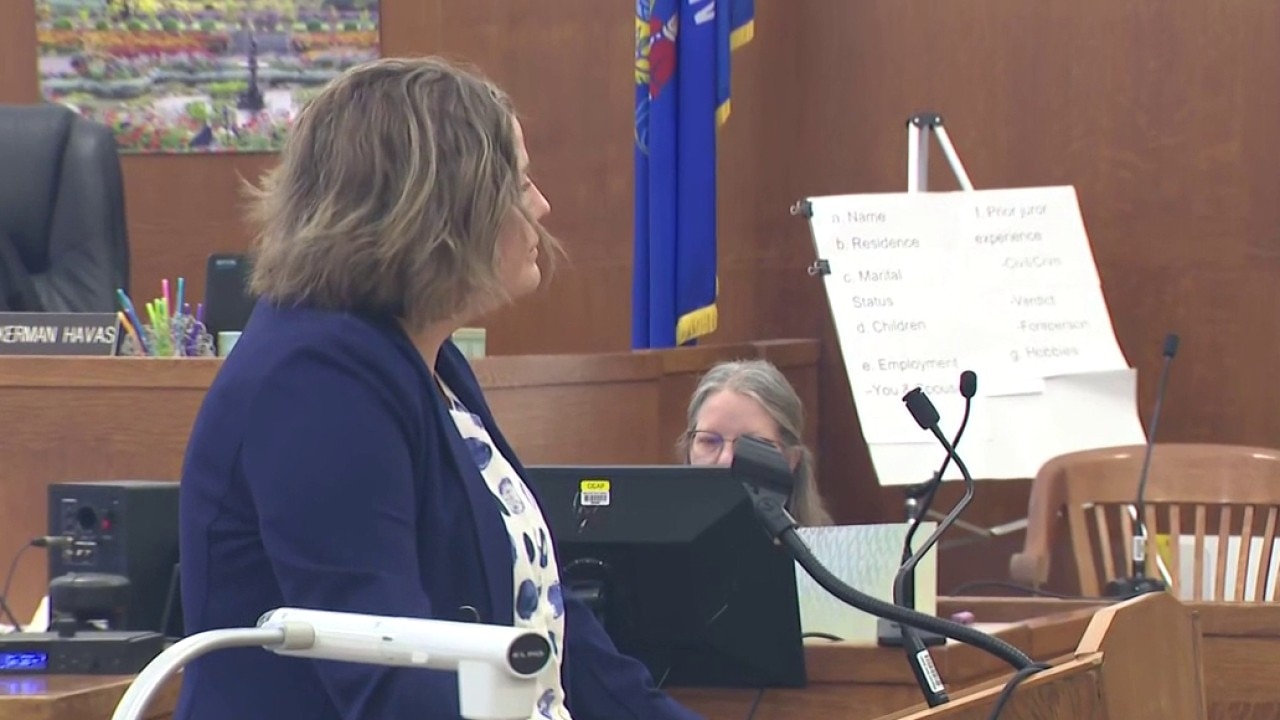
Tremaine Jones trial: Defense opening statement
The defense team in the Tremaine Jones trial presented its opening statement to jurors on Tuesday, March 31.
Prosecutor's opening statement
9:38 a.m.:
Assistant District Attorney Grant Huebner delivered the prosecution's opening statement. He described what happened leading up to the shooting and noted that Corder was filling in on the night he was killed. Huebner said Corder and McCray's body-worn cameras captured what happened, and that jurors would see that video.
Huebner said the state will walk the jury through every step of the investigation – including searches, fingerprint evidence, witness interviews.
"Officer Corder and Officer McCray were sent there because people called for help, and they're the police," Huebner said. "The defendant was there with a short-barreled rifle because he was there for a fight between girls, and he demanded people come outside or he was going to shoot, and Officer Corder died because of that."
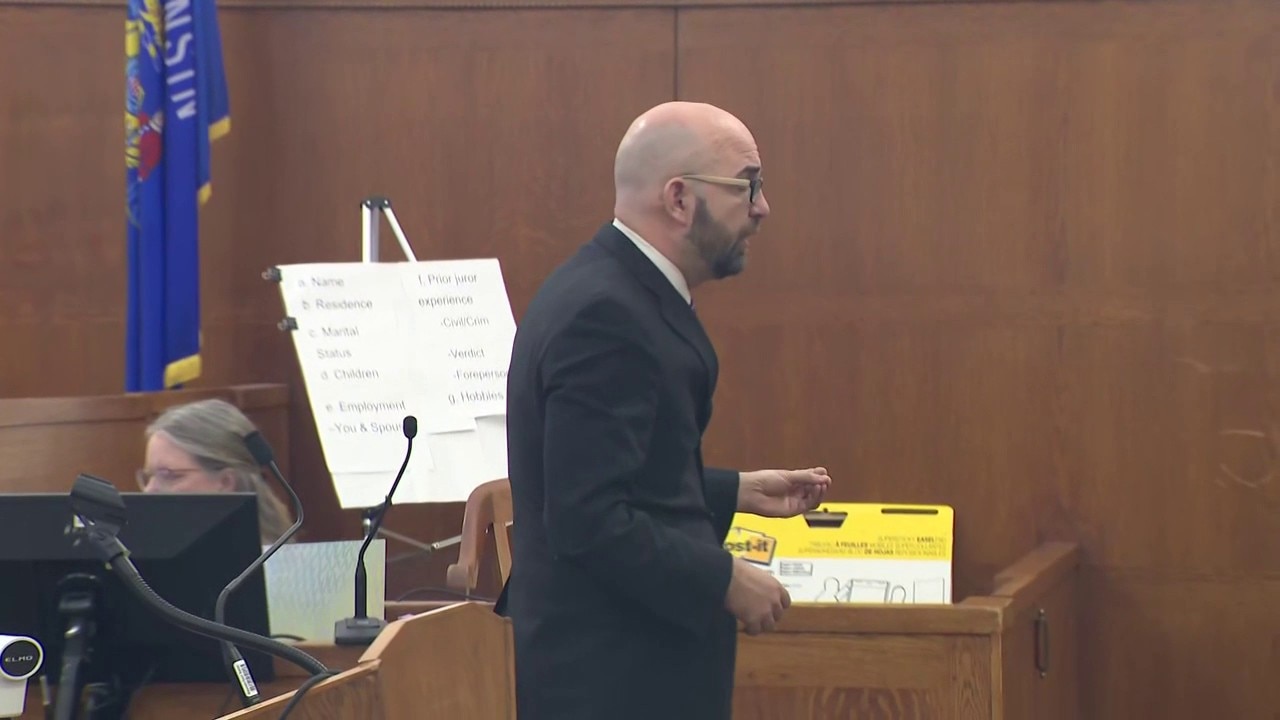
Tremaine Jones trial: Prosecution opening statement
The prosecution presented its opening statement in the Tremaine Jones trial on Tuesday morning, March 31. Jones is accused of killing Milwaukee Police Officer Kendall Corder and wounding Officer Christopher McCray in summer 2025.
Jury selected
9:18 a.m.:
The jury pool had been whittled down to 36 people by the end of Monday. That pool was cut to 14 jurors – nine men, five women – when court resumed on Tuesday. Two of those 14 are alternates.
Judge Michelle Havas then read preliminary jury instructions.
The shooting
The backstory:
Milwaukee Police Officers Kendall Corder and Christopher McCray were shot near 25th and Garfield on the night of June 26, 2025. They were initially called for a report of a person with a weapon, which was upgraded to shots fired while they were on the way.
When they arrived and stepped out of their squad, they were unexpectedly shot in an alley. Assistant Police Chief Nicole Waldner noted the officers were unable to return fire. Milwaukee Police Association President Alexander Ayala described it as "an ambush."
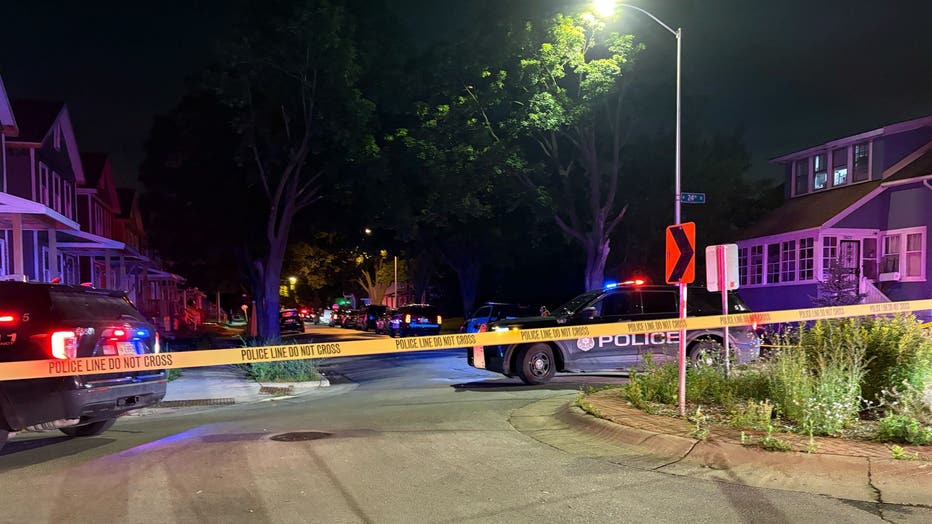
Scene near 25th and Garfield, Milwaukee
Corder dropped to the ground, and McCray – who had been shot in the foot, leg and back – ran to grab Corder's firearm and protect him, according to a criminal complaint. Backup officers and a tactical team arrived shortly after the shooting.
The two officers were taken to Froedtert Hospital, a Level I Trauma Center. McCray was released from the hospital days later, while Corder died of his wounds on June 29. Court filings said Corder suffered three gunshot wounds, one of which severed his spine.
SIGN UP TODAY: Get daily headlines, breaking news emails from FOX6 News
Dig deeper:
Prosecutors said there were fights between groups of women over Jones and allegations of cheating. While at an apartment building before officers arrived, Jones fired shots into the air. The officers arrived a short time later.
McCray said he and Corder were walking down an alley when he saw a flash coming from some bushes and heard a bang that "sounded like a firework," according to the complaint. More flashes and bangs, which were gunshots, followed.
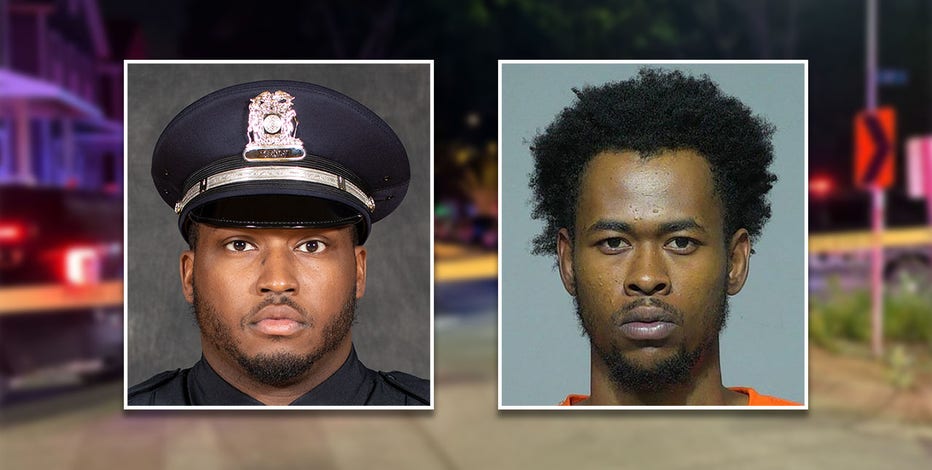
Milwaukee police officers shot, Tremaine Jones charged
A Milwaukee man is now charged in the shooting that killed Officer Kendall Corder and wounded Officer Christopher McCray last Thursday.
Court filings said police recovered 16 total rifle cartridge casings at the scene "consistent with the shots being fired from the bushes" as McCray described. They later recovered a rifle along a fence line that the Milwaukee Police Department Fusion Center later determined was "consistent" with being the gun that fired all 16 rounds. Forensic investigators pulled a latent fingerprint, identified as Jones', from the weapon.
The complaint said police also found a social security card, birth certificate and several debit cards with Jones' name on them inside a backpack in a nearby backyard. There was a receipt from a West Allis gun shop that showed Jones bought a gun on June 17 and picked it up on June 19.
Jones was arrested the morning after the shooting at a home near 37th and Villard. A witness said Jones did not know he was shooting at the police and "thought it was someone else," according to court filings. The witness said Jones also said he had "better get out of there" because he had "just killed a cop."
Complete coverage
Dig deeper:
FOX6 News has followed the case from the time of the shooting to the trial. Read and watch more coverage below at the links below:
- Tremaine Jones trial: Jury selection begins for man accused of shooting Milwaukee police officers
- Milwaukee Police Officer Kendall Corder laid to rest, loved ones say goodbye
- Milwaukee police officers shot, Tremaine Jones charged
- Remembering Milwaukee police officers who died in the line of duty
LIVESTREAM: Full coverage from March 31, 2026
WARNING: The livestream may include strong language and disturbing images. Discretion is advised.
The Source: FOX6 News is in court for the trial and referenced information from the Milwaukee Police Department, Milwaukee County District Attorney's Office, Wisconsin Circuit Court and prior coverage related to the shooting, investigation, funeral and more.