

Wisconsin projected budget surplus, school funding debate

Wisconsin projected budget surplus, school funding debate
What should Wisconsin do with an estimated budget surplus topping $2 billion? There's a new debate over your tax dollars and funding education.
MILWAUKEE - What should Wisconsin do with an estimated budget surplus topping $2 billion? There's a new debate over your tax dollars and funding education.
Budget surplus battle
Big picture view:
The nonpartisan Wisconsin Legislative Fiscal Bureau estimates the state will have a $2.3 billion budget surplus when the two-year budget ends in summer 2027. The budget signed into law already had some leftover money, but the state estimates it will collect much more taxes than expected.
FREE DOWNLOAD: Get breaking news alerts in the FOX LOCAL Mobile app for iOS or Android
Both parties said they're looking at proposals to lower property taxes. The Wisconsin Policy Forum reported most recent school property taxes are up nearly 8%.
"I urge the Legislature to right this wrong from the recent state budget, to pass my plan for over $1 billion in property tax relief to working families, seniors, veterans and many others across our state," Gov. Tony Evers said on Jan. 12.
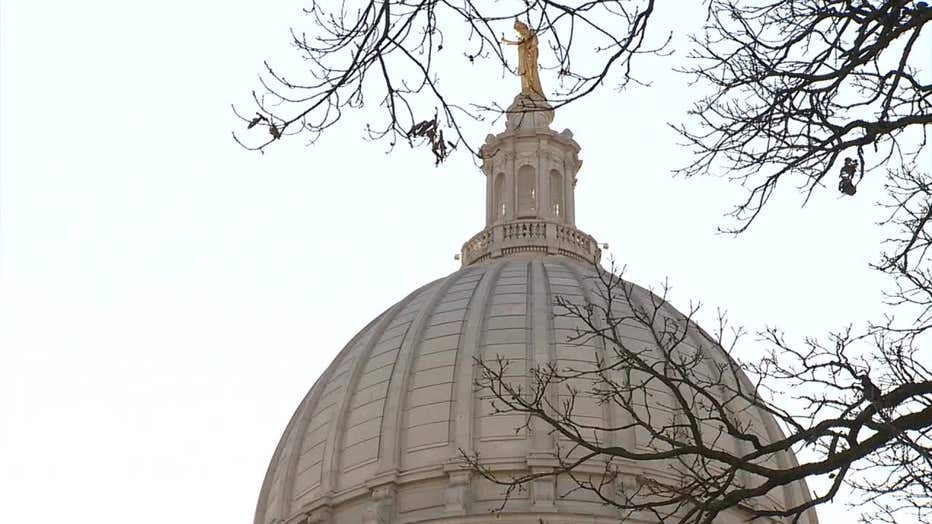
Wisconsin Capitol, Madison
"It seems like money is going to go into the school levy credit, so that is really spending on schools. It is going to go into the homestead tax credit, which is really only aimed at a small number of homeowners in Wisconsin. And the third is the veterans property tax credit, which, of course, is aimed only at folks who have served in our military," said Assembly Speaker Robin Vos (R-Rochester). "It's not a broad-based property tax relief."
SIGN UP TODAY: Get daily headlines, breaking news emails from FOX6 News
Republicans are upset with the governor's 400-year partial veto in 2023.
"Four-hundred-year veto is a big part of the problem. It's got to be fixed for any solution," Vos said. "Hopefully he would work with us to say, assuming we do property tax relief, we can't just keep putting more water into a bucket full of holes. We need to fill the holes and then make sure that the bucket has the ability to deliver the relief."
School funding
What we know:
In 2023, Evers used a partial veto to scratch out numbers and a hyphen to make per-student increases of $325 dollars per year through 2425.
"Although there is the $325 per pupil increase, there was no additional money put into the state budget for general aid," said Todd Price, a Kenosha Unified School Board member. "When that happens, when there's no additional state aid to offset that increase, that falls entirely on property taxpayers to pay, so there was not additional state aid put into the biennium budget for those increases.
"Therefore, when property tax bills hit last month, many people across, just about everybody across Wisconsin, saw a pretty significant increase in their property taxes. And that's because it was a decision not to add more state aid to the budget."
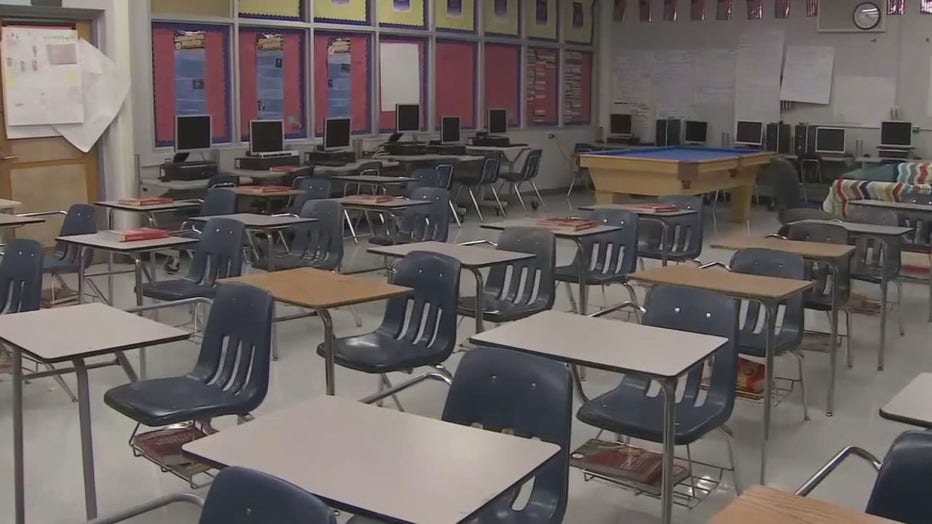
The five largest public school districts in Wisconsin – Milwaukee, Madison, Green Bay, Racine and Kenosha – said they need more help from the state.
"We have a number of needs, but the biggest challenge is keeping pace with inflation and making sure that we have the funds that we need going forward," said Price.
In a joint statement, the superintendents of those five school districts said the state is not reimbursing districts enough for special education.
"Our ask was 60%. We were told it was going to be 42%, and right now, it's coming in at around 35%," said Jeff Weiss, KUSD superintendent. "That's millions of dollars."
The Source: FOX6 News reviewed information from the Wisconsin Legislative Fiscal Bureau and Wisconsin Policy Forum, and conducted interviews.