

Marquette Law Poll: 4 out of 5 say failed surplus deal should have passed
New poll: Wisconsin supports failed budget surplus bill
A new Marquette University Law School poll found 80% of Wisconsin adults say the failed budget surplus deal on tax relief and school funding should have passed.
MILWAUKEE - A new Marquette Law School Poll found most Wisconsin adults supported a rejected surplus bill that would have created tax rebate checks, boosted special education reimbursement and eliminated state income taxes on tips and overtime.
Marquette Law Poll
What we know:
The poll found 80% of Wisconsin adults said the Legislature should have passed the bill. When asked about concerns that the proposal could be fiscally irresponsible and lead to a future deficit, 69% still said lawmakers should have approved it, while 21% said it was better to delay.
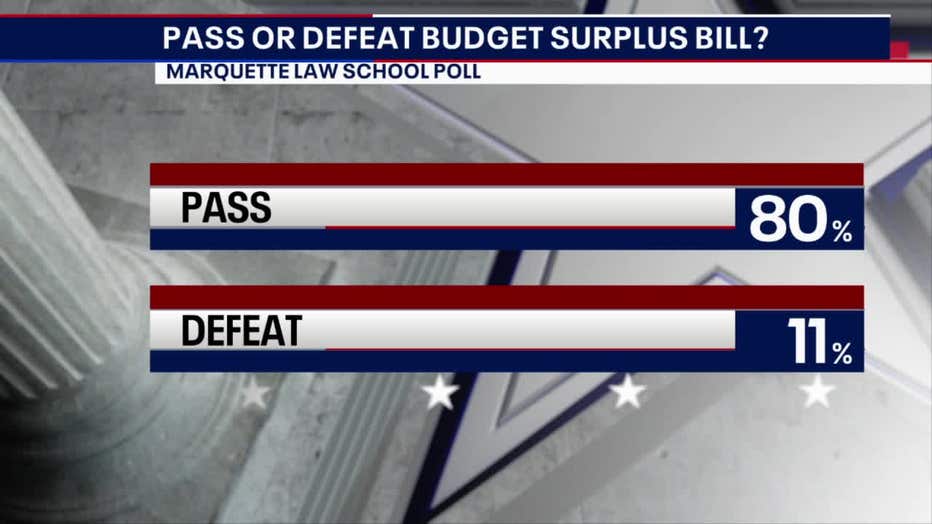
The poll highlights a rare moment of bipartisan consensus, with the surplus bill gaining support from 77% of Republicans, 81% of independents, and 82% of Democrats.
The poll also asked respondents to weigh in on the specific positions taken on the surplus bill by Gov. Tony Evers, Tom Tiffany, and the Democratic candidates.
FREE DOWNLOAD: Get breaking news alerts in the FOX LOCAL Mobile app for iOS or Android
According to the poll, 65% say Evers’ support for the bill was the right thing to do, with 15% saying it was the wrong thing and 20% saying they don’t know.
Bipartisan surplus plan
The backstory:
A bipartisan plan to use part of Wisconsin’s state surplus for school funding, property tax relief and direct payments to residents failed in the Legislature on May 13.
Wisconsin Capitol
The Senate rejected the bill after leaders spent hours trying to amend it and win over Republicans who were expected to vote no.
The proposal called for rebate checks of up to $300 for single filers and up to $600 for married couples. It also would have increased state reimbursements for special education and removed state income taxes on tips and overtime.
The plan also included more than $600 million for K-12 schools, including a special education reimbursement increase and more than $300 million in general school aid.
Wisconsin school funding, tax rebate bill fails; Evers criticizes lawmakers
Gov. Tony Evers criticized state lawmakers after a bipartisan Wisconsin surplus plan failed Wednesday night, May 13, blocking school funding, tax rebates and property tax relief.
About the poll
What we know:
The Marquette University Law School poll was conducted from May 20 to 21, 2026. It involved interviewing 454 Wisconsin adults, with a margin of error of +/-5.5 percentage points.
Complete results and methodology can be found on the Marquette Law School Poll website.
Weighing in
Local perspective:
Democrat Missy Hughes, a candidate for governor, supported the bill and said Wisconsin needs leadership willing to work across the aisle.
"And as governor, I think it's incredibly important that we have someone who is working across the aisle in a bipartisan manner in a non-political way. What we saw were lots of folks going into their corners and declaring their positions and not even giving the bill a chance," Hughes said. "And that's not leadership."
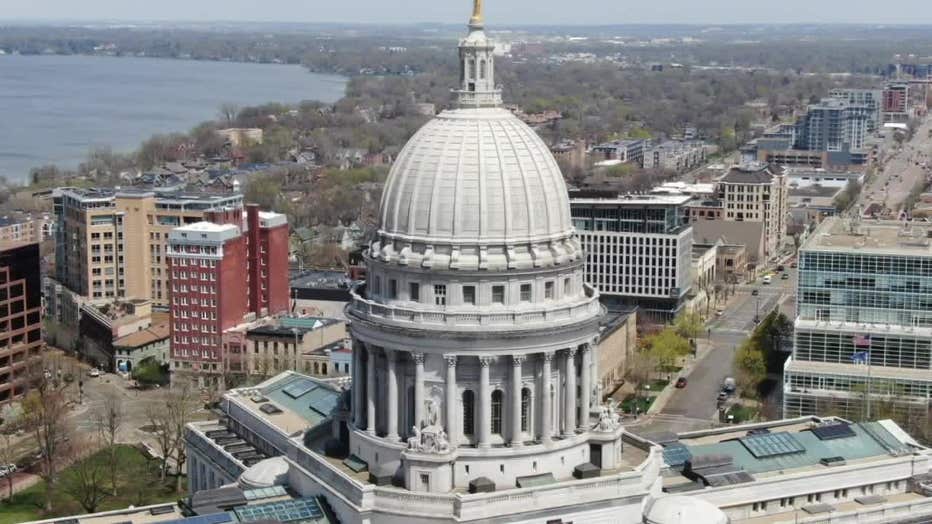
Wisconsin Capitol, Madison
U.S. Rep. Tom Tiffany (R-Wis.), also a candidate for governor, opposed the bill, saying he believed the state should have returned more of the surplus.
"They had a lot of money brought in to the state government last year, and just to send back a little bit," he said. "I thought they should have sent all the surplus back."
SIGN UP TODAY: Get daily headlines, breaking news emails from FOX6 News
Three Republican senators opposed the bill, along with all Democratic senators. Democrats pointed to estimates from the nonpartisan fiscal bureau that the proposal could create a deficit in future years.
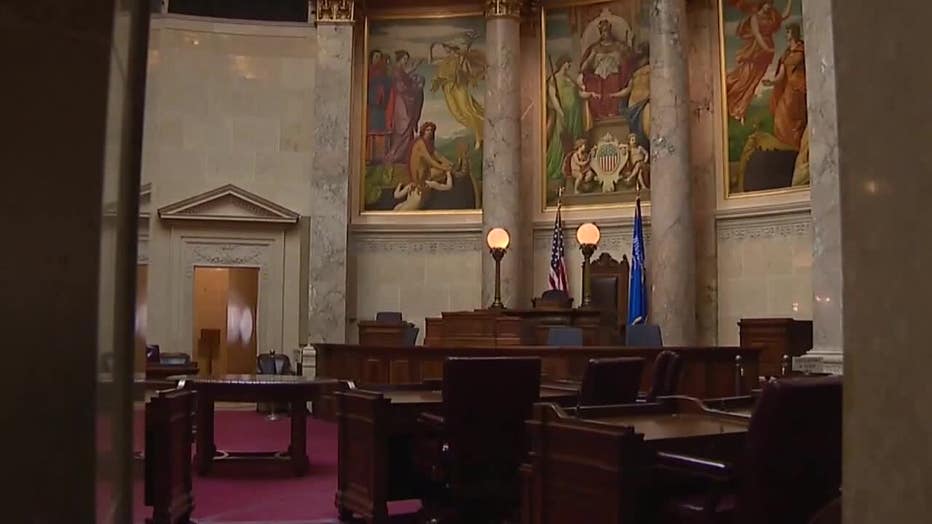
Wisconsin Capitol
"This was a short-term budget gimmick, a correction that would have set us on the course for a deficit," said state Sen. Chris Larson (D-Milwaukee).
Hughes pushed back on those concerns, saying the state’s continued growth should be part of the calculation.
"The structural deficit is something that's based on having absolutely no growth in the state," she said. "And by recognizing that we've had continuous growth of about 4%, we don't have to have as many fears about the structural deficit when it comes to thinking about this bill."
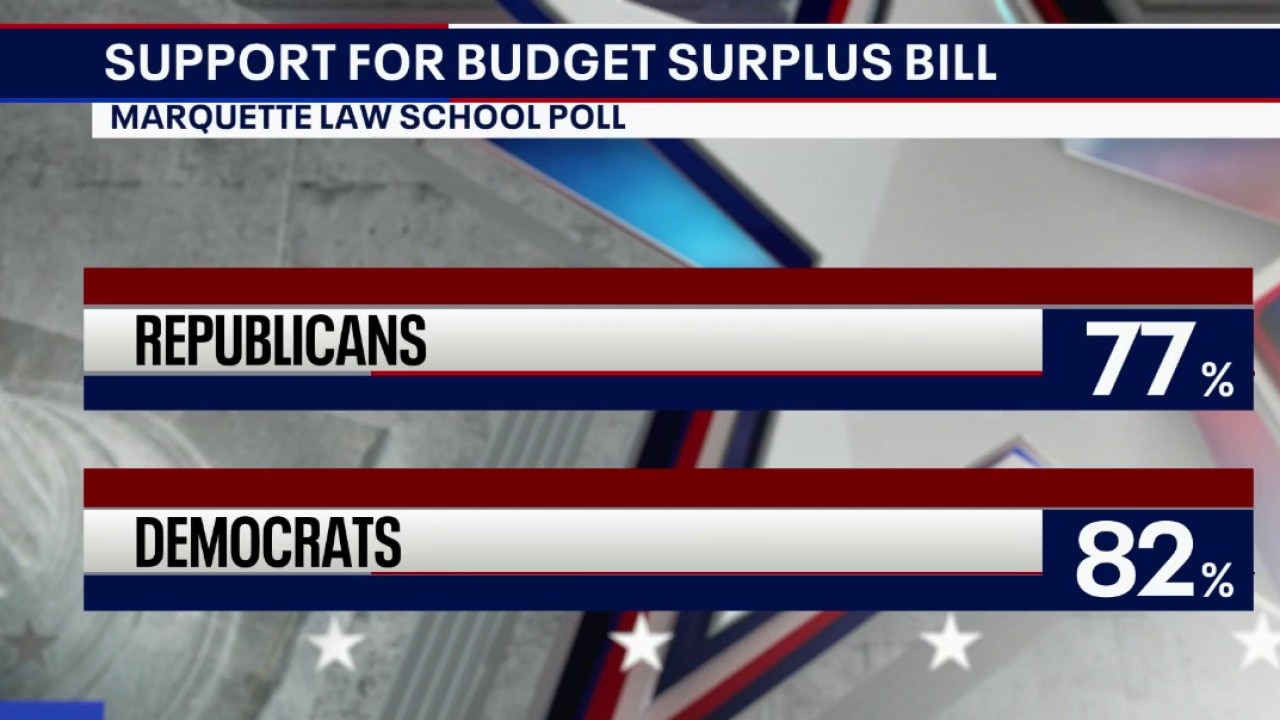
Marquette Poll: 4 out of 5 say failed surplus deal should have passed
Marquette Law School Poll finds 80% of Wisconsin adults say the failed budget surplus deal on tax relief and school funding should have passed.
Official statements
What they're saying:
FOX6 News reached out to several Wisconsin lawmakers about the poll. Their statements are listed below in the order they were received.
State Sen. Van Wanggaard (R-Racine):
"No kidding. Anyone with half a brain could have told you that when people are overtaxed they want, and should get, their money back. And it doesn’t even take half a brain to know that cash for higher costs of everything, property tax relief, special education funding, no taxes on tips and overtime would have made life more affordable for everyone.
"If Democrats are elected in November, no one will get their money back. They’ll spend the surplus on government, and then ask for even more of your money."
State Sen. Cory Tomczyk (R-Mosinee):
"I've said from day one that the surplus should go back to the taxpayers who were overcharged. It was Republicans in the Legislature who fought and secured this deal, and while the bill wasn't perfect, returning money to hardworking Wisconsinites and committing the state to meaningful property tax relief was always the right vote."
State Sen. Dan Feyen (R-Fond du Lac):
"The Marquette Law School poll confirms what we have been hearing from taxpayers for months. Hardworking Wisconsin families are struggling with rising costs and want their state Legislature to address this affordability crisis. The poll reveals that 4 out of 5 people supported this bill. The people of Wisconsin understand something that my Democrat colleagues refuse to: when the state collects billions more than it needs, that money should go right back to taxpayers.
"As I’ve said before, in divided government, compromise is a necessity. Republicans accepted that reality and worked with the Governor to put forward a bill that addressed affordability, providing both immediate and long-lasting permanent relief. It wasn’t a perfect bill by any means but rather a good-faith compromise that included no tax on tips, no tax on overtime, direct surplus payments, property tax relief and special education investments.
"Despite overwhelming public support, every single Senate Democrat voted against the bill, choosing to play dirty partisan politics with your money instead of standing with their constituents. This vote drew a clear contrast: Republicans want to return your money to you, while Senate Democrats want to keep it in Madison for themselves.
"As legislators, our constituents sent us to Madison to make their lives better. My Republican colleagues and I will always fight for tax relief and affordability. As for Senate Democrats? I think their unanimous vote against this bill tells Wisconsin everything they need to know about Democrats’ priorities."
State Sen. LaTonya Johnson (D-Milwaukee):
"Throughout this session, my Democratic colleagues and I repeatedly introduced legislation to lower costs and increase wages, while making stronger investments in our public schools. I understand why Wisconsinites want action. Under the Trump Administration, families are paying more for housing, groceries, healthcare, and childcare, and they deserve a government that takes those pressures seriously.
"I voted no because this bill would have created a projected $2.9 billion deficit by 2029 while withholding rebate checks from more than 30% of Wisconsin filers, including seniors, low-income Wisconsinites, and people with disabilities. We can’t call this bill a lifeline when we’re borrowing from the future while not helping those who need it the most.
"The Marquette poll shows that people want action, and I agree. But voters deserve to know the full tradeoff. This bill was not a responsible long-term solution. It was rushed to the floor after Republicans failed to build the votes for their own proposal. Senate Democrats remain open to a financially responsible deal that will bring down costs and invest meaningfully in schools, but that means actually sitting down for a real negotiation, not a last-minute bill designed to pass only with Republican votes."
Senate Minority Leader Dianne Hesselbein (D-Middleton):
"An analysis by the Legislative Fiscal Bureau confirmed the bi-partisan concerns expressed by legislators about the bill’s potential effect on Wisconsin’s fiscal outlook. If the Special Session proposal had passed, Wisconsin would be facing an estimated deficit of $2.95 billion at the end of the next state budget. Senate Democrats remain open to fiscally sound and financially sustainable solutions to lower property taxes, invest in public schools, and lower costs for all Wisconsinites. That’s what we will focus on when we are in the majority in 2027."
State Sen. Dora Drake (D-Milwaukee):
"The results of this poll are not surprising because Wisconsinites are desperate for immediate relief now. The Republican-controlled legislature has underfunded K-12 education for over 15 years, leaving Governor Evers to pick up the pieces. Accepting a future $2.95 billion deficit with the reality of having to cut services and raise taxes next year is bad policy.
Raising wages is a more effective solution to the immediate problem of rising gas and grocery prices and provides long-term benefits compared to the short-term relief provided by limited one-time rebates now and tax refunds next year. If Republicans agreed to raise the minimum wage to $15 an hour, repeal right-to-work, or even restore prevailing wage, I would have voted for this. But Republican lawmakers refused to negotiate with us when this bill was put together, and when they didn’t have the votes, they still refused to compromise. That’s why this bill failed."
The Source: Marquette University Law School provided the information used in this report.